
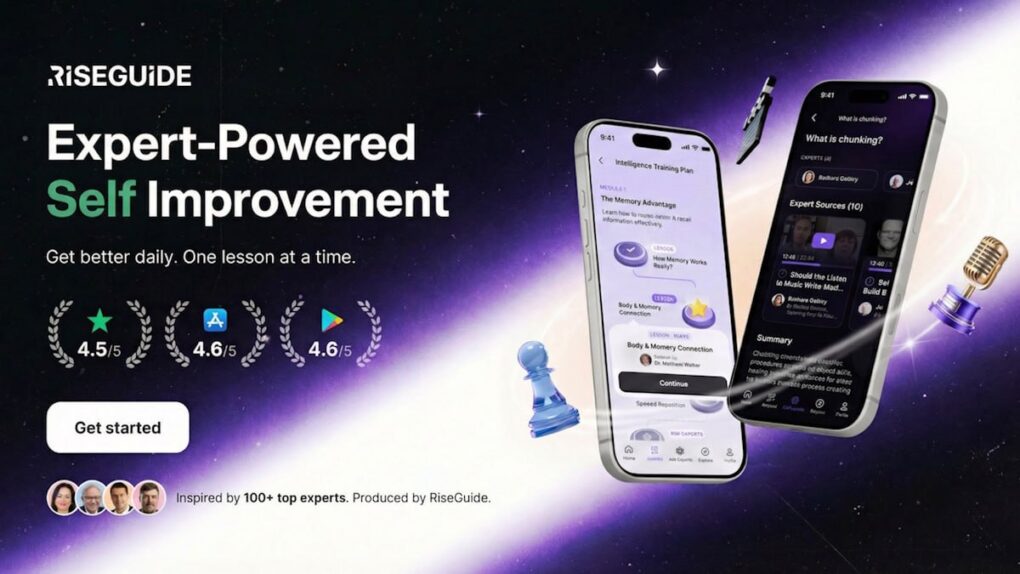
Most educational products look identical on the surface. Lessons, experts, nice videos. The real difference is not in the content. It’s the role the platform forces you to play. Some services allow passive knowledge consumption. Others mandate action, exercises, and regular engagement. The truth is uncomfortable. Skill formation requires deliberate, consistent practice.
Platforms sit on a spectrum. At one end, you watch. At the other, you do. Your chance of building an actual skill is directly tied to where you choose to stand. This ranking looks past glossy production to examine how each model engages, or fails to engage, the user. The more a platform demands active participation, the higher the potential for real change. But the user’s effort must match that demand. That’s the trade-off.
Passive Learning vs Active Skill Building
Watching a lecture is consumption. Doing a task is practice. Skills solidify only through repetition and application, a brutal fact many platforms ignore. You can understand a concept intellectually without being able to execute it. The gap between knowing and doing is where learning fails. A platform’s architecture either bridges this gap or widens it.
Does it end with a “play” button or a “do this now” prompt? The distinction defines everything. Below, we rank platforms by how much they force the user out of spectator mode and into participant mode.
Active participation in microlearning means the design requires a physical or cognitive output from the user to proceed:
- Completion requires more than just scrolling or viewing time.
- Lessons are paired with mandatory exercises, templates, or tasks.
- Progress is gated by user action, not passive consumption.
- The platform measures doing, not watching.
Without these signals, you’re just entertaining yourself with educational content.
RiseGuide
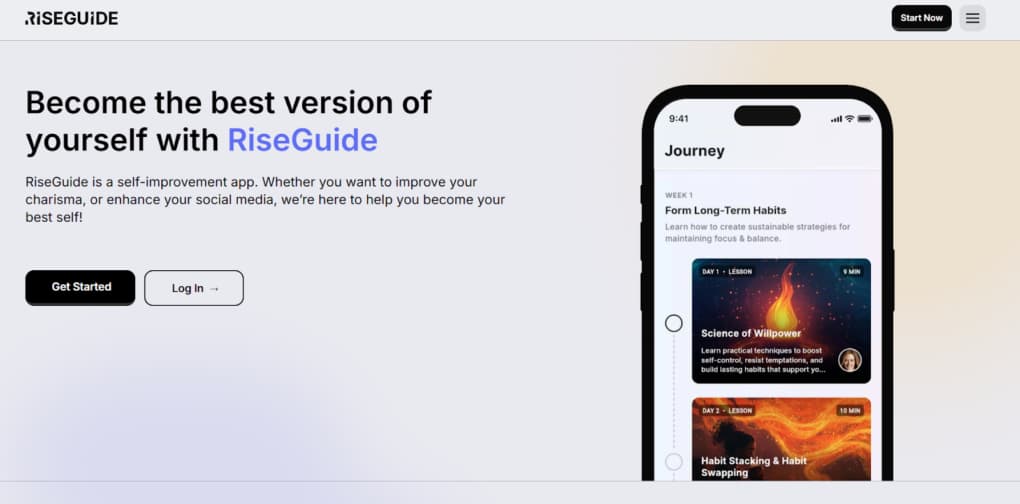
RiseGuide belongs to a specific category. From the first interaction, it embeds user action as a non-negotiable component of the experience. The platform is architected around doing, not viewing. It assumes you are there to act.
Designed Around Daily User Action
The model is a practice loop. Short daily lessons are the entry point, not the conclusion. Each lesson connects to practical tools, such as a communication framework to fill out or a memory drill to complete. The SEEK feature demands that you articulate a specific problem before it gives an expert method. The entire flow pushes you from intake to output. Learning converts into a discrete, often small, action. The system is built for repetition, for turning those actions into micro-habits.
This platform compels participation by making it the only way to engage meaningfully. Action is the engine. Elements that mandate user participation:
- Short daily lessons are paired with immediate application tasks or exercises.
- The SEEK function requires users to formulate and ask specific questions.
- Built-in templates and frameworks demand user input to complete.
- Progress tracking is tied to the completion of these practical actions.
- The design intentionally makes passive consumption difficult and unrewarding.
You can’t just binge. You have to do. The limitation is you have to do it. It requires discipline, and progress feels incremental, not explosive. This isn’t edutainment.
Studio
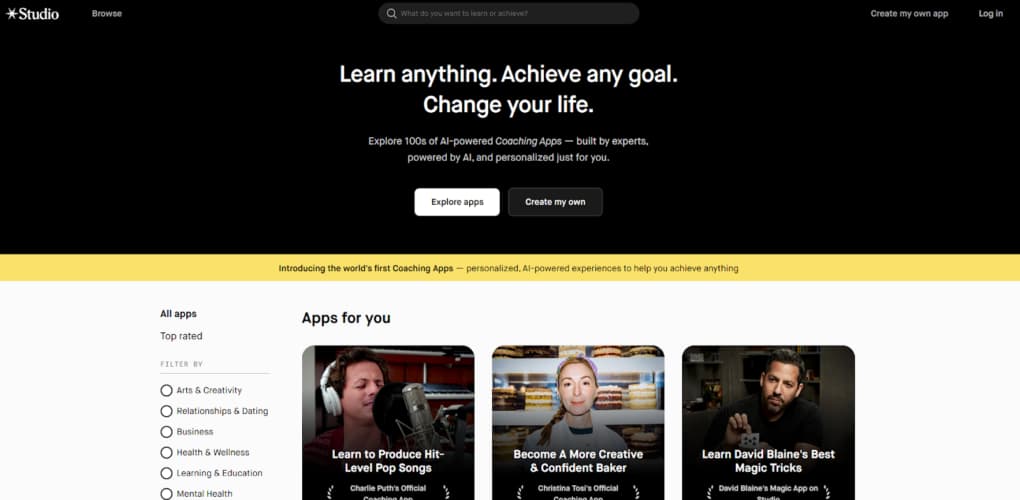
Studio also demands activity, but through a different mechanism: creative output. Participation is mandatory because the goal is a finished project. You learn by making a thing. The activity is the point.
Participation Through Creative Output
The model is project-centric. You enroll to produce a song, a design, or a dish. Lessons are the instructional steps to reach that tangible output. Participation isn’t an add-on; it’s the entire premise. You cannot complete a course without creating the project. This creates a natural, deadline-like pressure to act. The scope is specialized, focused on hands-on creative skills. The participation is deep but narrow.
It forces you to build something from scratch, which is a powerful form of engagement. Its participatory framework:
- Courses are structured around the completion of a hands-on creative project.
- Lessons are directly linked to actionable steps in the project workflow.
- Progress is measured by project milestones and the final output.
- The model inherently limits scope to skill areas with clear creative outputs.
You participate by building a portfolio piece. Completion depends on producing the project outcome.
Mindvalley
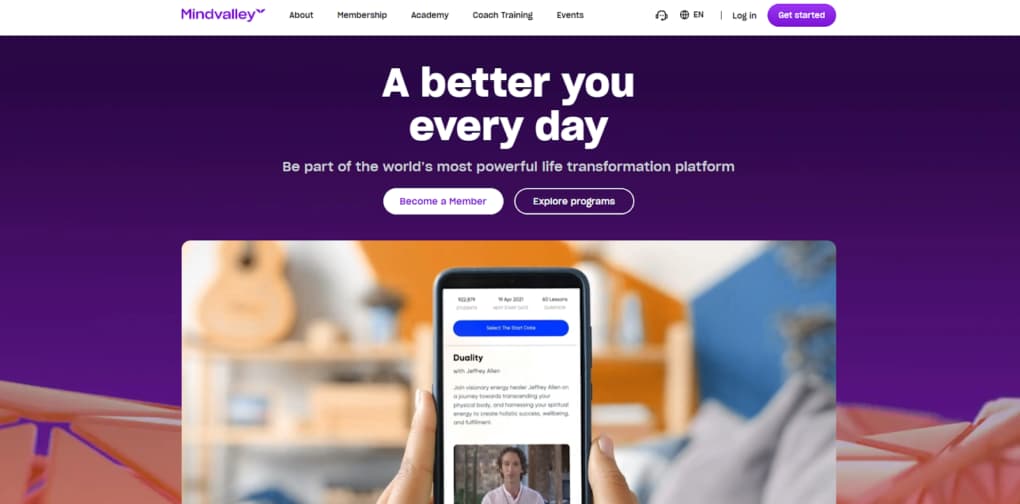
Participation in Mindvalley manifests as guided inner work, not daily micro-tasks. You engage by following long programs and performing reflective exercises, meditations, or journaling prompts. The activity is often internal and psychological.
Active Reflection Inside Guided Programs
Users commit to multi-week programs focused on transformation. Participation means showing up for scheduled sessions and doing the prescribed internal practices such as visualizations, affirmations, and reflective writing. The focus is on mindset and energy shifts. The action is less about an external task and more about an internal process. It requires active cognitive engagement, but of a specific, contemplative kind.
The platform structures deep, sequential inner work. How it engages users:
- Programs require regular attendance and completion of reflective exercises.
- Progress is tied to following a set sequence of internal practices and lessons.
- The model emphasizes participatory reflection and personal journaling.
- It offers less focus on external, immediately applicable skill drills.
You participate in a journey of self-inquiry. The work happens inside your head.
MasterClass
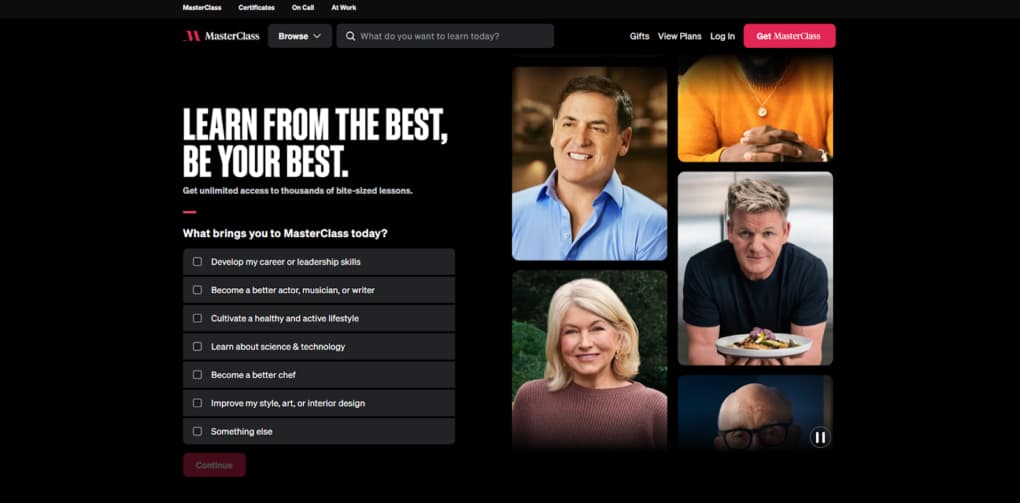
User participation here is minimal, almost optional. The primary experience is watching and listening to masters at work. The platform delivers supremely high-quality insight but places zero structural demand on the user to practice or apply it.
High-Quality Insight With Optional Participation
The product is the video lesson. You watch a chef explain flavor balancing. You listen to a director discuss cinematography. The production is exquisite, the teaching brilliant. Supplemental workbooks might exist, but they are extras, not requirements. The platform does not gate progress on completing an exercise. The responsibility for moving from inspired viewing to practical doing is entirely yours. It’s a lecture hall, not a workshop.
It assumes you are there for perspective, not practice. Its engagement model is clear:
- The primary mode of engagement is viewing high-production video lectures.
- Any supplementary exercises or community activities are strictly optional.
- Progress through content is based on watch time, not task completion.
- The platform places no structural demands on the user to act on the lessons.
You are an audience member. Taking the stage is your own decision.
Imprint
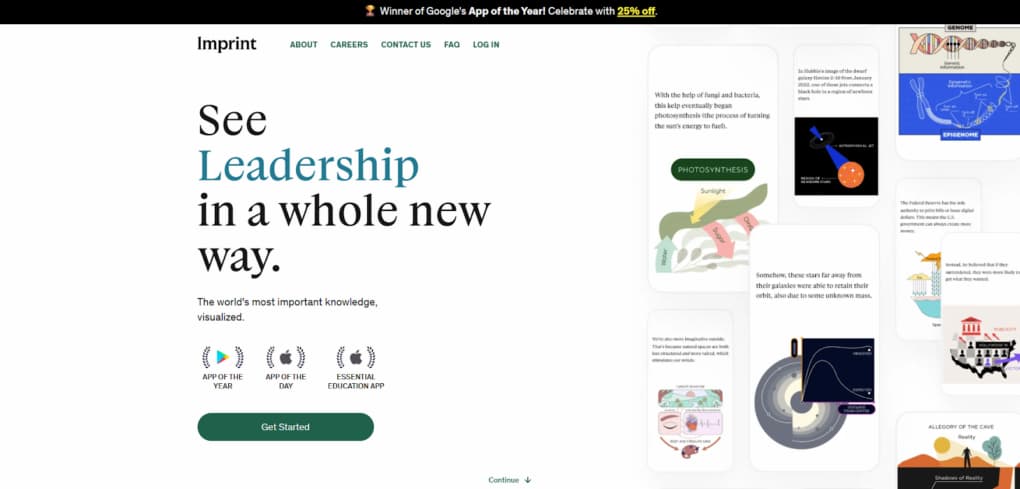
Imprint operates with short summaries and micro-ideas. User participation is light, often limited to reading, saving, or lightly interacting with insight cards. The practical component is limited, making it closer to curated content consumption than active training.
Idea Consumption With Light Interaction
The format is quick, digestible summaries of books and concepts. You swipe through cards containing key ideas. You might save one to a list. The interaction is minimal, usually limited to a tap, a save, or maybe a share. There is no requirement to apply the insight, no framework to practice it. It’s built for efficient knowledge grazing, not for building repeatable skills through doing.
It’s a stream of concepts for your mental inventory. The platform’s participatory ceiling is low:
- Engagement consists mainly of reading or listening to short idea summaries.
- Interaction features are limited to saving, liking, or organizing insights.
- There are no built-in mechanisms for practical application or exercise.
- The model prioritizes quick consumption and broad exposure over deep practice.
You participate by curating a personal library of insights, not by training a skill.
Conclusion
The pattern is undeniable. More required participation means a higher probability of skill formation, but also a greater tax on user effort and discipline. Less required participation makes for an easier, more inspirational experience that often stops at knowledge acquisition. The right choice isn’t about quality. It’s about honesty.
Are you seeking inspiration and perspective, which a platform like MasterClass delivers beautifully? Or are you seeking a system for regular practice, which demands the participatory architecture of a RiseGuide?
Maybe you want project-based creative skill building, where Studio’s output mandate works. Or perhaps you prefer guided inner work, the reflective participation of Mindvalley. Understand what you’re signing up for. A system that makes you work will deliver results if you show up. A system that lets you watch is a form of entertainment. Pick the one that matches your goal and your willingness to sweat a little. That’s the only ranking that holds water.
Last modified: 2026-02-20